
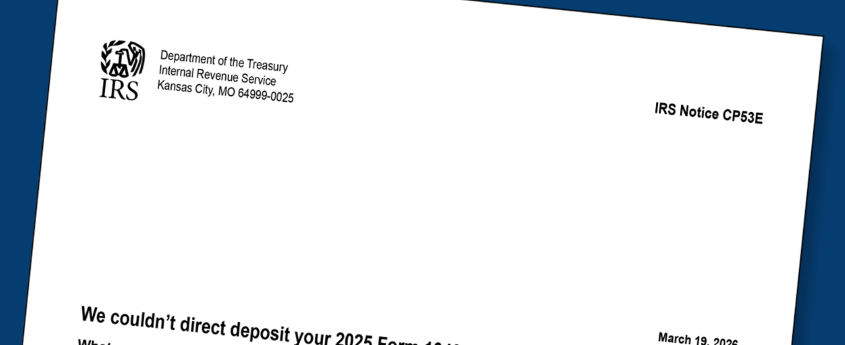
Received An IRS CP53E Notice? Here’s What It Means
During the 2026 filing season, millions of taxpayers received an unfamiliar IRS notice known as CP53E, leaving many unsure whether the notice was legitimate, whether action was required, or even why they received it.
A recent report from the Treasury Inspector General for Tax Administration (TIGTA) found that unclear instructions and limited taxpayer awareness contributed to confusion surrounding the notices.
Why Is the IRS Sending CP53E Notices?
The CP53E notice is connected to the federal government’s transition toward electronic tax refunds rather than paper checks.
The IRS sent the notices primarily to taxpayers who filed returns without providing bank information for direct deposit. The notice generally instructed taxpayers to add or update their banking information through an IRS online account so that any refund could be issued electronically.
According to TIGTA, approximately 4.2 million individual taxpayers received CP53E notices during the initiative.
Why Did the Notices Cause Confusion?
One major issue was that some taxpayers received the notice even though they weren’t expecting a refund — and in some cases actually owed money to the IRS.
Because the notice referred to providing banking information for a refund, recipients understandably questioned whether it was legitimate or had been sent in error.
Tax professionals also reported concerns because taxpayers were being asked to provide financial information online, something consumers are routinely warned to approach cautiously because of tax-related scams and identity theft.
TIGTA concluded that additional public outreach before the notices were issued could have reduced some of that confusion.
Could a CP53E Notice Delay Your Refund?
Potentially.
The IRS temporarily held some refunds for taxpayers who had not supplied direct-deposit information. Taxpayers generally had 30 days to provide or update banking information through their IRS online account.
If no action was taken, the IRS indicated that a paper check could eventually be issued, although TIGTA found that the process may have caused delays for some taxpayers.
What Should You Do If You Receive a CP53E Notice?
First, don’t ignore IRS correspondence, but don’t automatically provide financial information simply because a notice asks for it either.
Review the notice carefully and compare it with your filed tax return and refund status.
If banking information is required, use the official IRS website and your IRS Online Account rather than clicking links or scanning unfamiliar codes from emails, texts or other unsolicited communications.
And if the notice doesn’t appear to match your tax situation — for example, you’re not expecting a refund — consider contacting your tax professional or the IRS before taking further action.
When in Doubt, Ask Before You Act
IRS notices can be intimidating, especially when they involve refunds or requests for banking information.
If you receive a CP53E notice or other unfamiliar IRS correspondence and aren’t sure what it means, Fast Forward Accounting can help you review the notice, determine whether action is necessary and understand your next steps.
Source: The Tax Adviser


