
Fast Forward Accounting Solutions
  • Home
  • Services
    • CFO and Controller Services
    • Interim and Project Staffing
    • QuickBooks Support
    • Audit Preparation
    • Income Tax Preparation
    • Bookkeeping & Payroll
  • Our Team
  • Resources
  • Accounting News
    • Budgeting
    • Business
    • Payroll
    • Personal
    • Tax Planning
  • Contact Us
  • Search
  • Menu Menu

Five Things To Know About Trump’s New Retirement Plan — Including A $1,000 Government Match

May 4, 2026

Millions of working Americans still don’t have access to a retirement plan through their job—no 401(k), no employer match, no automatic payroll deductions. Just personal discipline. And for most people, that’s not enough to build long-term savings.

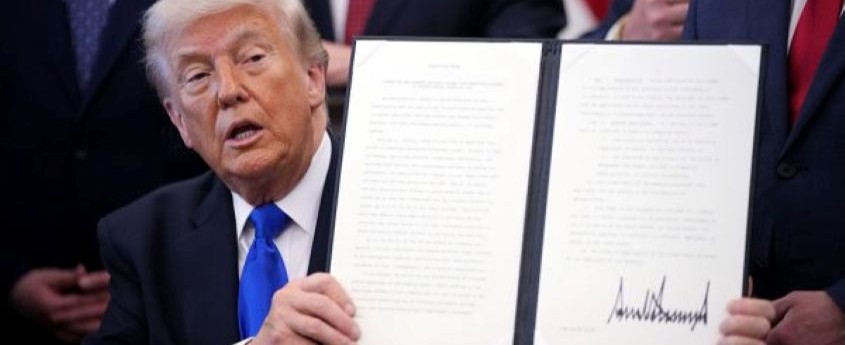
An executive order from President Trump aims to change that. Here are five key takeaways.

1. The Problem Is Massive—And Uneven

Roughly 54 million Americans lack access to an employer-sponsored retirement plan, according to the Economic Innovation Group. But the burden isn’t evenly shared. Data from AARP shows that about 80% of workers without a plan earn under $53,000 a year. Small businesses are a major gap—nearly 78% of companies with fewer than 10 employees offer no retirement benefits. The disparity also affects minority workers more heavily: about 63% of Hispanic workers, 52% of Black workers, and 44% of Asian American workers lack access to workplace plans. Over time, this adds up. Without automatic contributions or employer matches, many workers don’t just save less—they often don’t save at all.

2. What The Executive Order Does

The order directs the Treasury Department to launch a new website, TrumpIRA.gov, by January 2027. The platform will act as a marketplace where workers can compare vetted IRA options based on fees, minimum contributions, and balance requirements. While the government will screen the plans, it won’t directly partner with specific financial institutions. It also opens the door for private donors to contribute directly to workers’ retirement accounts—an idea already gaining attention.

3. A Major Incentive Is Coming: The Saver’s Match

A key piece of the Secure 2.0 Act of 2022 takes effect in 2027. Known as the Saver’s Match, it allows the federal government to match up to 50% of retirement contributions—up to $1,000—for eligible workers earning under $35,000. In simple terms: contribute $2,000, get $1,000 added. Unlike the current Saver’s Credit, which reduces taxes, this program deposits matching funds directly into your retirement account. But there’s a catch—you need a qualifying account to receive the match. Right now, about 27 million eligible workers don’t have one. This order is designed to close that gap.

4. A Different Approach Than Past Efforts

This isn’t the first attempt to tackle the issue. The myRA program launched under Barack Obama in 2014 funneled savings into U.S. Treasury bonds—safe, but with relatively low long-term returns. The new approach leans on private-sector IRAs, giving workers access to diversified investments similar to those in the Thrift Savings Plan. For younger workers especially, that difference could mean significantly higher savings over time.

5. What Happens Next—And What You Can Do Now

The order also calls for future policy proposals, including possible automatic enrollment and expanded eligibility. Those changes would require Congress to act. State-level auto-IRA programs—already in place in places like California, Oregon, and Illinois—are expected to continue alongside the federal effort. If you don’t currently have a retirement plan, there’s no reason to wait. You can open an IRA today through most major brokerages. If you qualify, you may already be eligible for the Saver’s Credit—and having an account in place will position you to benefit from the Saver’s Match when it launches.

Economist Teresa Ghilarducci notes that while the plan expands access, it still relies on voluntary participation—a limitation that has historically left gaps. Even so, for millions of workers with no retirement plan at all, gaining access is a meaningful first step.


Source: Money Talks News

Tags: federal saver's match program, government savings plan, IRAs, treasury department, trump retirement account, trumpira.gov
Share this entry
  • Share on Facebook
  • Share on Twitter
  • Share on LinkedIn
  • Share by Mail
https://www.fastforwardaccounting.net/wp-content/uploads/2026/05/685595852_1385604996937996_8295441598087249650_n.jpeg 345 845 ADMIN https://dev.fastforwardaccounting.net/wp-content/uploads/2023/03/Fast-Forward-Accounting-Solutions-Logo-Web.png ADMIN2026-05-04 18:58:332026-05-04 18:58:33Five Things To Know About Trump’s New Retirement Plan — Including A $1,000 Government Match
You might also like
Workers In 68 Jobs May Soon Be Exempt from Paying Taxes On Tips — Including Some Unexpected Ones
clock and retirement jar with coins_shutterstock_512665549 845x345The Biden Administration Finalized A Controversial New Retirement Rule — Here Are 5 Things You Need To Know Now
4 Financial Mistakes Even Smart People Make
Retired And Returning To Work: How The Extra Income Could Collide With Other Financial Considerations
Seven Ways To Reduce Taxable Income
Three Bad IRA Mistakes You Can Avoid

What Can We Help You Find?

Recent Posts

  • 401(k) Hardship Withdrawals Are At Record Highs: What They Really Cost YouJune 16, 2026 - 7:36 pm

    Financial experts warn that while 401(k) hardship withdrawals can provide emergency access to funds, they often come at a high cost. Alternatives such as 401(k) loans, credit cards, or home equity financing may be less damaging in the long run.

  • Still Waiting On Your Tax Refund? The IRS Says Relief May Be Coming This MonthJune 8, 2026 - 5:43 pm

    Two groups are more likely to still be waiting for their tax refund: taxpayers who filed under extended deadlines and those whose refunds were delayed because of missing banking information. The delays also come during a tax season that has seen significantly larger refunds. However, according to the IRS, relief may be on the way this month.

  • Tax Season May Be Over, But Many Seniors Are Still Getting Hit With Surprise Bills They Didn’t See ComingJune 1, 2026 - 8:14 pm

    Across the country, seniors are opening IRS notices, learning they owe additional taxes, or discovering penalties they never expected. The issue often stems from the increasingly complex nature of retirement income. Social Security benefits, pensions, retirement account withdrawals, investment earnings, and Medicare-related costs.

  • IRS Raises 2026 Tax Brackets And 401(k) Contribution Limits, As House Backs Taxpayer Rights BillMay 25, 2026 - 1:07 pm

    For 2026, the IRS has raised federal income tax bracket thresholds and standard deductions to reflect inflation. The IRS also raised retirement contribution limits for 2026. Meanwhile, the House passed a bipartisan bill to pause refund deadlines and protect judicial review during IRS collection actions.

  • IRS Sending More ‘Math Error’ Letters To Taxpayers: Don’t Panic — Here’s WhyMay 18, 2026 - 9:10 pm

    “Math Error Notices” are sent when the IRS believes a tax return contains a mathematical or clerical mistake. That could include simple calculation errors, missing information, incorrect tax credits, or income figures that do not match IRS records. What is changing now is the level of detail the IRS must provide.

  • IRS May Owe You A Refund For COVID-Era Fines. Here’s How To ApplyMay 11, 2026 - 7:41 pm

    The IRS issued penalties for late tax filings, unpaid taxes, or missed estimated tax payments between January 2020 and July 11, 2023 during the COVID-19 pandemic. Millions of taxpayers may be eligible for refunds from those fines. However, relief is not automatic for most taxpayers and a claim must be submitted for a refund or penalty abatement by July 10.

  • Five Things To Know About Trump’s New Retirement Plan — Including A $1,000 Government MatchMay 4, 2026 - 6:58 pm

    Roughly 54 million Americans lack access to an employer-sponsored retirement plan. And for most people personal discipline is not enough to build long-term savings. An executive order from President Trump aims to change that. Here are five key takeaways.

  • This New Tax Plan Could Wipe Out Federal Income Taxes For MillionsApril 27, 2026 - 6:14 pm

    The Working Americans’ Tax Cut Act could eliminate federal income taxes for millions and reduce them for many more. While still just a proposal, it highlights a growing push to use tax policy to address rising living costs.

FAST FORWARD ACCOUNTING SOLUTIONS

A client focused accounting firm that serves business throughout South Florida.

Contact Us

Fast Forward Accounting Solutions, P.A.
2834 University Drive
Coral Springs, Florida 33065
954.821.5378

Copyright © 2023 Fast Forward Accounting Solutions | Site Designed By CRE-sources, Inc.
This New Tax Plan Could Wipe Out Federal Income Taxes For MillionsIRS May Owe You A Refund For COVID-Era Fines. Here’s How To Apply
Scroll to top